Overview
You have a story in your head, maybe one you’ve been telling your kids at bedtime for years. Now you want to turn it into a real book. The good news? You don’t need a big publisher or an agent to make that happen. Learning how to self-publish a children’s book is more straightforward than most people think, and thousands of first-time authors do it every year.
This guide walks you through every step of how to publish your own children’s book and how to create and publish a children’s book, from your first draft to your first sale, in plain, practical terms.
Step 1: How to Self-Publish a Children’s Book; Start With a Story Worth Telling
Every great children’s book starts with one clear idea. Not a complicated plot. Not three storylines running at once. One idea, one emotional truth, one thing you want a child to walk away feeling or understanding.
Before you write a single word, ask yourself: Who is this book for? A board book for toddlers looks nothing like a middle-grade chapter book. Picture books for ages 3–6 are usually 500–800 words. Early readers for ages 6–8 run longer. Knowing your age group shapes everything: the vocabulary, the page count, the illustration style.
Don’t overthink the idea. The best children’s books are often the simplest ones.
Step 2: Write Your Own Children’s Book Draft: Don’t Wait for Perfect
When it comes to how to write your own children’s book, the first draft is just about getting the story down. It won’t be perfect. It isn’t supposed to be.
Write the whole thing from start to finish without stopping to edit. Read it aloud when you’re done; children’s books live in the ear as much as on the page. If a sentence trips you up when you say it out loud, it’ll trip up a child, too.
Aim for rhythm and repetition where it fits. Kids love the comfort of a pattern, a repeated phrase, a running joke, a familiar beat that shows up throughout the story.
Step 3: Edit Before You Do Anything Else
A lot of first-time authors rush straight from draft to illustration. That’s a costly mistake, literally. Book illustrations are expensive, and if you change the text after the artwork is done, you may need to redo pages.
Get your manuscript as tight as possible first. Cut any words that aren’t earning their place. Simplify sentences. Read it to a real child if you can, and watch where their attention wanders.
Consider hiring a children’s book editor for at least one professional pass. It doesn’t have to cost a fortune, and the difference between an edited and unedited manuscript is usually obvious.
Step 4: Find the Right Illustrator for Your Vision
Most children’s picture books rely heavily on visual content to tell their story. In fact, sometimes the illustrations tell more of the story than does the text! The biggest consideration for self-publishing a children’s book will be the choice of illustrator to work with.
To find potential illustrators, begin by searching through artist portfolios on sites like Reedsy, 99designs, or LinkedIn’s Children’s Book Illustrator Group. You want to find someone whose illustration style is consistent with the emotional tone of your story: whimsical, bold, soft, humorous, etc.
Once you select an illustrator, you must agree upon everything regarding your working relationship before you start creating artwork – the quantity of illustrations, the number of rounds of revisions, file types, timelines, and final ownership rights of the artwork must all be specified in the written contract to protect the interests of both parties.
Step 5: Format Your Book for Print and Digital
Once your text and illustrations are finalized, you need to format the book correctly for publishing. This is where creating your own book tools comes in handy; platforms like Canva, Adobe InDesign, or Book Bolt let you lay out your pages professionally, even without a design background.
Children’s books have standard trim sizes. For picture books, 8×8 or 8.5×8.5 inches are common. Make sure your file meets the specifications of whichever platform you’re publishing on; each one has slightly different requirements.
If this step feels too technical, many freelance formatters will handle it for a flat fee, usually between $50 and $200.
Step 6: Design a Cover That Stands Out
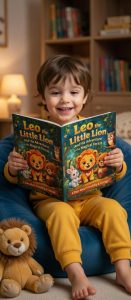
Your cover is doing a lot of work. In a sea of thumbnails on Amazon or a shelf of spines in a bookshop, it has about half a second to catch someone’s eye.
Work with your illustrator on the cover, or hire a specialist book cover designer. The title should be large, legible, and readable even at thumbnail size. Bright colors and strong contrast tend to work well in the children’s market.
Don’t try to save money here. A weak cover is the fastest way to hurt sales before a reader ever sees page one.
Step 7: Choose Your Self-Publishing Platform
This is where children’s book self-publishing gets interesting. You have real options, and each one suits different goals.
- Amazon KDP (Kindle Direct Publishing) is the biggest platform in the world for self-published books. Learning how to self-publish a children’s book on Amazon is straightforward; you upload your files, set your price, and your book is available to millions of readers within 24–72 hours. KDP also offers print-on-demand, so you don’t need to order a bulk print run upfront.
- IngramSpark gives you access to a wider distribution network, including bookstores and libraries. It costs a little more to set up, but it reaches further than Amazon alone.
- Draft2Digital is a good option for digital distribution across multiple retailers at once.
The best way to self-publish a children’s book depends on your goals. Want maximum reach? Use both KDP and IngramSpark. Want simplicity? Start with KDP and expand later.
Step 8: Get Your ISBN and Copyright Sorted
An ISBN (International Standard Book Number) is your book’s unique identifier. You’ll need one, sometimes more than one, if you’re publishing in multiple formats.
In the US, ISBNs are purchased through Bowker (myidentifiers.com). A single ISBN costs around $125; a bundle of ten is a better value at $295. Amazon KDP offers a free ISBN, but it limits distribution to Amazon only. For wider distribution, buy your own.
Copyright in the US is automatic the moment you create original work, but registering it with the US Copyright Office ($45–$65) gives you stronger legal protection if you ever need to defend your rights.
Step 9: Figure Out How to Publish a Children’s Book for Free, or Close to It
Yes, it is possible to learn how to publish a children’s book for free, at least in terms of platform fees. Amazon KDP charges nothing to upload and publish. Draft2Digital is also free to use.
The real costs come from the services around the book: editing, illustration, formatting, and cover design. There’s no honest way around those if you want a professional result. But you can make a book online using free tools like Canva for layout, and there are affordable illustrators on platforms like Fiverr if your budget is tight.
Going free on the platform side and investing in quality illustration is a sensible middle ground for first-time authors.
Step 10: Launch, Promote, and Keep Going
Once your book has been published, here’s just a partial list of ways you can get people to know that your book exists.
Use your network. This includes your friends and family, local schools, parenting groups, and social media. All of these groups will help to rapidly build early reviews of your book on Amazon and help propel your book to the top of the search result lists. This is especially important for any future children’s book titles you want to self-publish, as early review building will make it easier for you to launch those books in the future.
Reach out to children’s book bloggers and bookstagrammers for features or reviews. Consider setting up an author website, even a simple one, where people can learn about you and your book.
And then? Start thinking about your next one. The authors who do best in self-publishing are rarely one-book wonders. A small library of books builds an audience in a way a single title rarely can.
How Much Does It Cost to Self-Publish a Children’s Book?
Understanding how much does it cost to self-publish a children’s book is something every author should plan for upfront. Here’s a realistic breakdown:
| Service | Budget Option | Mid-Range | Professional |
| Manuscript editing | $100–$300 | $300–$600 | $600–$1,200 |
| Illustration | $500–$1,500 | $1,500–$4,000 | $4,000–$10,000+ |
| Book formatting | $0–$50 (DIY) | $50–$200 | $200–$500 |
| Cover design | Included with Illustrator | $100–$300 | $300–$800 |
| ISBN | $0 (KDP free) | $125 (single) | $295 (10-pack) |
| Copyright registration | $0 (automatic) | $45–$65 | $45–$65 |
| Platform fees | $0 (KDP/D2D) | $49 (IngramSpark) | $49+ |
| Total estimate | ~$600–$2,000 | ~$2,000–$5,000 | ~$5,000–$15,000+ |
The biggest variable is always illustration. A picture book with 30+ full-color spreads from an experienced illustrator is a significant investment, but it’s also what makes or breaks the book in the market.
FAQ’s
1. How much does it cost to publish your own children’s book?
The total cost varies widely depending on the level of professional support you use. At the low end, you might spend $600–$2,000 by keeping the illustration simple and doing your own formatting. A fully professional production; experienced illustrator, professional editor, custom design, can run $5,000 to $15,000 or more. The platform itself (Amazon KDP, IngramSpark) is often free or low-cost. The real investment goes into making the book look and read as good as it possibly can.
2. Can I use ChatGPT to write a book and sell it?
Although you can utilize AI tools like ChatGPT to brainstorm, outline, and draft content with assistance, concerns arise about disclosure, platform policies, and reader trust when it comes to selling a book that is completely written by AI. Currently, Amazon KDP requires authors to disclose their use of AI-generated content. Since children’s literature relies heavily on authentic voice and emotional resonance, and AI still has a long way to go before being able to replicate either convincingly, the use of AI should be limited to assistance in establishing your creative works.
3. What types of children’s books are in demand?
Picture books with diverse characters and inclusive stories are consistently strong sellers. Books that address big emotions, such as anxiety, grief, new siblings, and starting school, remain popular with parents and educators. STEM-themed books for early readers are growing fast. Funny, rhyming picture books for ages 3–6 never go out of style. If you’re writing to a trend, make sure the story still feels genuine; readers can tell when a book was written to chase a market rather than tell a real story.
4. Do children’s books still sell well?
Yes, children’s publishing is one of the most resilient sectors in the book market. Print book sales for children have held steady even as adult print sales have fluctuated. Self-published children’s books have carved out a real space, especially on Amazon, where discoverability tools give indie authors a genuine shot at reaching readers. The market is competitive, but a well-made, well-marketed children’s book absolutely still sells.
5. Do I need an LLC to self-publish?
An LLC is not required when self-publishing a children’s book. The majority of first-time authors self-publish as sole proprietors using their own names. An LLC could become advantageous if you are publishing several titles, generating a significant amount of revenue, or are looking to separate your personal and business finances for the benefit of tax and liability issues. For this reason, it would be advisable to consult with an accountant or business attorney prior to deciding which structure fits your particular needs.
Ready to Make Your Own Book a Reality?
Now you know how to self-publish a children’s book, from the first draft to the final launch. It takes work, patience, and the right team around you. But it is absolutely doable, and the result, a real book with your name on it, in the hands of a child, is worth every step.
If you’d like expert support anywhere along the way, Bumblebear Publishing specializes in helping first-time children’s book authors bring their stories to life. From editing and illustration to formatting and publishing guidance, we’re here to help you do this right.
Your story deserves to be read. Let’s get it out there.