Overview
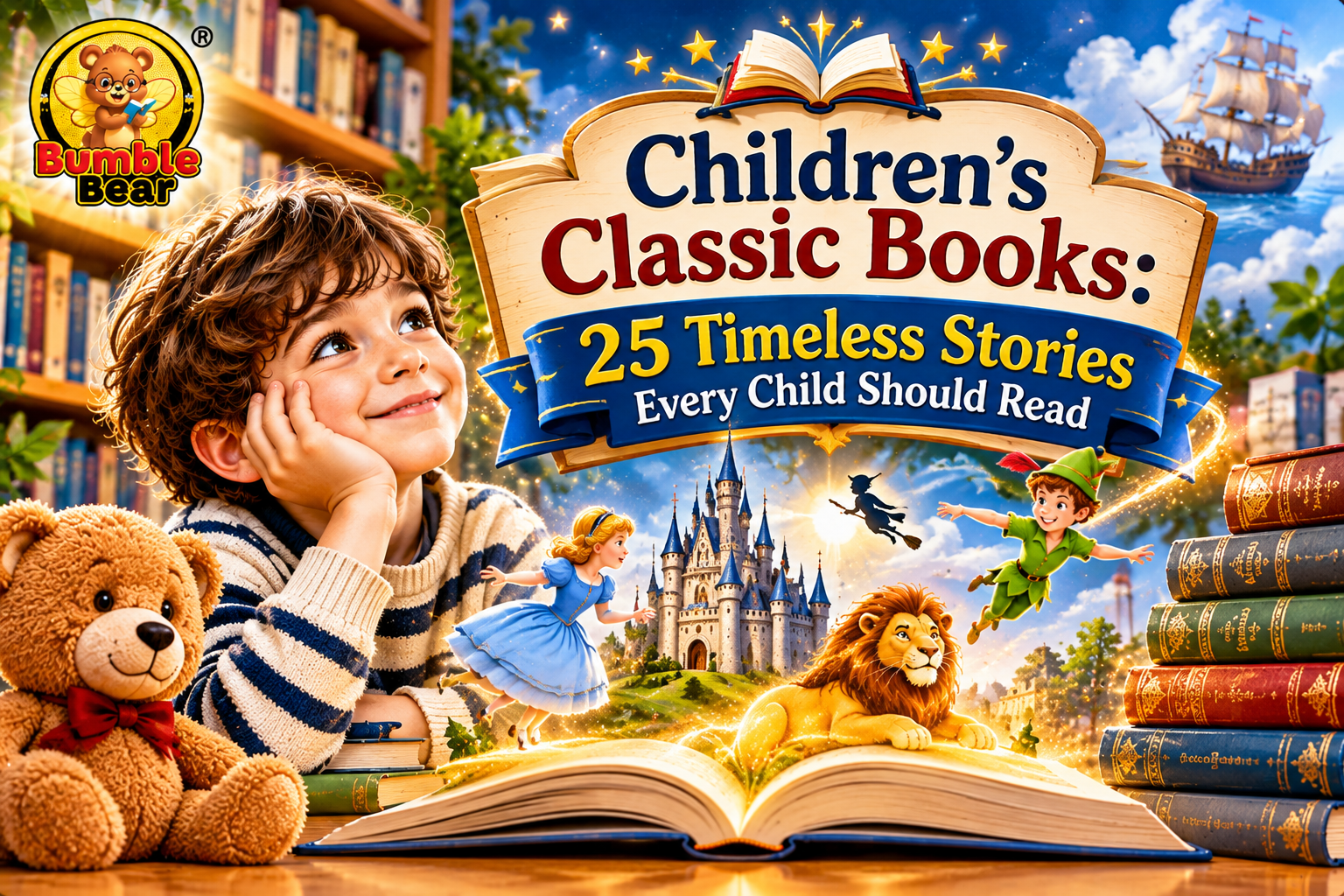
Some stories never go out of style. Children’s classic books are the ones parents read to their children and, years later, children read to their own. They are loved for strong characters, memorable language, and big feelings that stay with a reader for life. This guide shares 25 classic children’s books, grouped by age, so you can find the right one quickly. You will also learn why these stories last, what children can learn from them, and what writers can take from them. If you dream of creating a story of your own, children’s book publishing services can help turn your idea into a finished book.
What Makes a Book a Children’s Classic?
There is no official list, but classics share a few traits:
- They last – Readers still love them decades, or even a century, after publication.
- They tell a strong story – Clear characters, a real problem, and a satisfying ending.
- They speak to children honestly – They treat young readers as smart and curious.
- They work on two levels – Children enjoy the story while adults notice deeper meaning.
- They have memorable language – Rhythm, repetition, and vivid images stick in the mind.
Remember that “classic” is partly a matter of opinion. Different countries and generations have their own favorites, so treat any list, including this one, as a starting point.
Classic Children’s Books for Ages 0 to 3
Very young children love rhythm, repetition, and simple pictures. Classic board books and early picture books fit this stage well.
- Goodnight Moon by Margaret Wise Brown. A calming bedtime rhyme that says goodnight to everything in a quiet room.
- The Very Hungry Caterpillar by Eric Carle. Counting, days of the week, and bright collage art follow a caterpillar’s snack-filled week.
- Brown Bear, Brown Bear, What Do You See? by Bill Martin Jr. and Eric Carle. A repeating pattern that toddlers quickly learn to predict.
- Where’s Spot? by Eric Hill. A lift-the-flap game of hide-and-seek.
- Pat the Bunny by Dorothy Kunhardt. A touch-and-feel book made for tiny hands.
Many of these are available as sturdy board books. Their short text and bold pictures show why classic children’s board books work so well for babies and toddlers.
Classic Children’s Picture Books for Ages 3 to 6
Picture books at this stage blend longer stories with art that rewards close looking.
- Where the Wild Things Are by Maurice Sendak. Max sails to a land of monsters and learns that home is where he is loved.
- The Cat in the Hat by Dr. Seuss. Silly rhymes and a mischievous visitor on a rainy day.
- Corduroy by Don Freeman. A toy bear searches for a lost button and finds a friend.
- The Snowy Day by Ezra Jack Keats. A quiet, beautiful look at a child’s day in new snow.
- Make Way for Ducklings by Robert McCloskey. A duck family crosses a busy Boston street.
- The Tale of Peter Rabbit by Beatrix Potter. A naughty rabbit sneaks into Mr. McGregor’s garden. First published in the early 1900s, it is a true old classic.
Illustration is a big part of why these books last. For more on how artists create that look, see these children’s book illustrations styles.
Classic Children’s Books for Ages 5 to 8
Children who are starting to read alone enjoy stories with a bit more plot, humour, and adventure.
- Charlotte’s Web by E.B. White. A pig, a spider, and a story about friendship and loss.
- The Velveteen Rabbit by Margery Williams. A toy rabbit learns what it means to become real through love.
- Winnie-the-Pooh by A.A. Milne. Gentle adventures with a bear, a piglet, and a very anxious donkey.
- Curious George by H.A. Rey. A cheerful monkey whose curiosity always lands him in trouble.
- Madeline by Ludwig Bemelmans. A brave little girl in Paris, told in rhyme.
If you are looking for classic stories that suit ages 5 to 8, these titles read aloud beautifully and also work for new readers.
Classic Children’s Chapter Books for Ages 9 to 12
Older children can take on longer books with deeper themes, bigger worlds, and more complex characters.
- Alice’s Adventures in Wonderland by Lewis Carroll. A girl tumbles down a rabbit hole into a world of nonsense and wordplay.
- The Secret Garden by Frances Hodgson Burnett. A lonely girl discovers a hidden garden and heals those around her.
- Anne of Green Gables by L.M. Montgomery. A talkative, imaginative orphan wins hearts on Prince Edward Island.
- The Lion, the Witch and the Wardrobe by C.S. Lewis. Four children step through a wardrobe into Narnia.
- Matilda by Roald Dahl. A brilliant girl uses her wits against cruel adults.
- Little Women by Louisa May Alcott. Four sisters grow up in Civil War-era America.
- A Wrinkle in Time by Madeleine L’Engle. A girl travels through space and time to rescue her father.
- Charlie and the Chocolate Factory by Roald Dahl. A poor boy wins a tour of a magical sweet factory.
- The Wonderful Wizard of Oz by L. Frank Baum. A Kansas girl travels to a fantastical land and finds her way home.
Quick Reference: Classic Children’s Books by Age
| Age Group | Good Starting Picks |
| 0 to 3 | Goodnight Moon, The Very Hungry Caterpillar |
| 3 to 6 | Where the Wild Things Are, The Snowy Day |
| 5 to 8 | Charlotte’s Web, Winnie-the-Pooh |
| 9 to 12 | The Secret Garden, Anne of Green Gables |
Age ranges are guides only. A confident young reader may enjoy older titles, and many classics reward rereading at any age.
Classic Children’s Books for Christmas, Halloween, and Fall
Seasonal reading is a lovely tradition. A few well-known options:
- Christmas: The Polar Express by Chris Van Allsburg, How the Grinch Stole Christmas! by Dr. Seuss, and A Christmas Carol by Charles Dickens for older readers.
- Halloween: Room on the Broom by Julia Donaldson and The Legend of Sleepy Hollow for older children.
- Fall: Fletcher and the Falling Leaves by Julia Rawlinson and Pumpkin Soup by Helen Cooper.
Some of these are modern favorites rather than century-old classics. Choose by what your family enjoys.
Classic Children’s Books from Around the World
Classics are not limited to one country. Every culture has stories that generations have grown up with.
- United Kingdom: Winnie-the-Pooh, Peter Rabbit, Alice in Wonderland, and the work of Roald Dahl are widely loved British classics.
- United States: Charlotte’s Web, Where the Wild Things Are, and Little Women are American staples.
- France: Le Petit Prince by Antoine de Saint-Exupéry and Madeline.
- Germany: The fairy tales collected by the Brothers Grimm and Struwwelpeter.
- Australia: Possum Magic by Mem Fox and Hyland and Snugglepot and Cuddlepie by May Gibbs.
- India: Folk tales such as the Panchatantra and Jataka tales have been shared for generations.
Exploring stories from different places helps children see the world through new eyes.
Classic Children’s Books From the 1990s and 2000s
Some books are classics for the generation that grew up with them. Popular examples include:
- Harry Potter and the Philosopher’s Stone by J.K. Rowling (1997)
- The Giving Tree is older, but Click, Clack, Moo: Cows That Type by Doreen Cronin (2000) became a modern favourite
- Diary of a Wimpy Kid by Jeff Kinney (2007)
- The Magic School Bus series by Joanna Cole
Whether these will be called classics a century from now is up to time and readers, but many families already treat them that way.
Why Are Classic Children’s Books Still Popular Today?
Classics endure for good reasons.
- They deal with timeless feelings. Fear, friendship, loneliness, courage, and belonging are the same today as they were 100 years ago.
- They are shared across generations. A grandparent and a grandchild can love the same book.
- They are rich in language. Rhyme, rhythm, and imagery build vocabulary and a love of reading.
- They offer comfort and familiarity. Children enjoy hearing favourite stories again and again.
- They have stood the test of time. If a book is still in print after many decades, parents, teachers, and librarians trust it.
What Lessons Can Children Learn From Classic Books?
Classic stories teach without lecturing.
- Kindness and friendship in Charlotte’s Web
- Courage in The Wonderful Wizard of Oz
- Imagination and curiosity in Alice’s Adventures in Wonderland
- Healing and growth in The Secret Garden
- Standing up to unfairness in Matilda
- Dealing with big feelings in Where the Wild Things Are
- Love and loss in The Velveteen Rabbit
Reading these stories together gives families a gentle way to talk about hard topics.
How to Choose a Classic for Your Child
- Match the book to the child’s age and reading level. Read a page together to test.
- Follow their interests. Animals, adventure, magic, or everyday life?
- Try a read-aloud first. Many classics sound wonderful spoken.
- Choose a good edition. Look for clear type and quality illustrations.
- Preview older books. Some classics contain attitudes or language that feel dated, so read ahead and talk about them with your child.
- Mix old and new. Pair a classic with a modern book on a similar theme.
What Writers Can Learn From Classic Children’s Books
If you want to write for children, classics are a free course in craft.
- Keep it simple. Strong stories often have a clear problem and a clear ending.
- Use rhythm and repetition. Think of Brown Bear, Brown Bear.
- Create unforgettable characters. Pooh, Max, and Charlotte are remembered for their personalities.
- Let pictures and words work together. The best picture books never repeat what the art already shows.
- Respect your reader. Children can handle big feelings.
Study how your favorites are built, then tell your own story in your own voice. And if you want to bring a manuscript to readers, working with children’s book publishing agents and publishing professionals can help you understand your options.
Key Takeaways
- Children’s classic books last because they tell strong stories with timeless themes.
- This list of 25 titles covers ages 0 to 12, from board books to chapter books.
- Seasonal, international, and modern favourites can all find a place on a family shelf.
- Classics teach kindness, courage, imagination, and resilience.
- Choose by age, interest, and read-aloud appeal, and preview older titles.
- Writers can learn from classics about rhythm, character, and the partnership between words and pictures.
close
Children’s classic books earn their place because they speak honestly to young readers and keep speaking to them for generations. Whether you start with a bedtime favourite like Goodnight Moon or an adventure like The Secret Garden, you are giving your child stories that have comforted and inspired millions. Pick one that fits your child’s age, read it together, and let it spark the next conversation. And if you are inspired to write a story that might become someone’s favorite, children’s book publishing agents and publishing professionals can help you take the next step.
Frequently Asked Questions
What are the best classic children’s books of all time?
Frequently loved titles include Charlotte’s Web, Where the Wild Things Are, Goodnight Moon, The Very Hungry Caterpillar, Winnie-the-Pooh, Alice’s Adventures in Wonderland, and The Secret Garden. “Best” is a matter of taste, so use lists as a starting point.
Which children’s classic books should every child read?
There is no required list, but good starting points are Charlotte’s Web, Where the Wild Things Are, The Velveteen Rabbit, The Secret Garden, and The Lion, the Witch and the Wardrobe. Choose books that match your child’s age and interests.
What age is appropriate for reading classic children’s books?
Classics suit every age. Board books like Goodnight Moon work from babyhood, picture books from about 3 to 6, and chapter books such as Anne of Green Gables from about 8 or 9. Many are also lovely to read aloud to younger children.
What are the most popular classic books for children?
Widely popular choices include Charlotte’s Web, The Very Hungry Caterpillar, Matilda, Charlie and the Chocolate Factory, Winnie-the-Pooh, and Alice’s Adventures in Wonderland.
Which classic children’s books are best for ages 5–8?
Charlotte’s Web, The Velveteen Rabbit, Winnie-the-Pooh, Curious George, and Madeline are good choices. They have clear plots, gentle humour, and language that works well for reading aloud or early independent reading.
What are the best classic books for children ages 9–12?
The Secret Garden, Anne of Green Gables, The Lion, the Witch and the Wardrobe, Matilda, A Wrinkle in Time, and Little Women are strong picks for this age.
Why are classic children’s books still popular today?
They explore timeless feelings, use memorable language, can be shared across generations, and have proven their appeal over many decades. Parents and teachers also trust them.
What lessons can children learn from classic books?
Classics gently teach kindness, courage, imagination, resilience, and how to handle big feelings. Because they teach through story, children absorb the lessons without feeling lectured.
Sources
- Publisher and library listings for publication details of the books named (verify dates and editions before citing)
- Public library and school reading lists for age recommendations
- Official author and publisher websites for current editions